
Your brain depends on healthy blood flow and strong communication between brain cells to stay sharp. But with age, these systems begin to decline. Blood flow slows, memory fades, and the body’s natural balance of insulin-like growth factor 1 (IGF-1) begins to shift. 1,2 That is where cGP (cyclic Glycine-Proline) makes all the difference, by restoring the body’s ability to use IGF-1 effectively. 3
cGP is a small peptide molecule naturally produced in the body. It plays a vital role in regulating IGF-1, an essential hormone for growth, repair, and protection in the brain. cGP works by freeing IGF-1 from its binding protein, allowing it to be active and available when the brain needs it.3 When IGF-1 is functioning properly, your brain cells receive the oxygen, nutrients, and support they need to thrive. Unfortunately, IGF-1 activity begins to decline from around age 454 and is reduced in many brain-related conditions. This is exactly when we need cGP the most!
Your brain requires a constant supply of blood to function well. Damage to the brain’s blood vessels from high blood pressure or stiff arteries contributes to memory loss in older adults. 5,6
It is concerning to consider; the brain’s blood flow declines by 0.42% each year from middle age onwards. 7 Much like compounding interest on a loan, damage to blood vessels builds up over time, eventually reaching a tipping point around age 75 - an age that corresponds with a sharp increase in the risk of major brain challenges.
The first regions affected by reduced blood flow in middle age are those areas responsible for memory, decision-making, and learning.8
It is not only the large arteries that are impacted. Delicate blood vessels deep in the brain, called capillaries, are particularly vulnerable. These capillaries feed brain cells and clear waste.
This is where cGP helps. It supports the repair and growth of these delicate blood vessels by working through the IGF-1 system.9 A recent study found that giving cGP early in life led to a lifetime of better learning and memory. Researchers observed that cGP promoted an increase in capillary growth and strengthened connections between brain cells in the brain’s memory centre (the hippocampus). The researchers reported increases in key markers of brain plasticity, namely astrocyte branching and GluR-1 expression in the hippocampus. These changes help the brain form and maintain healthy neural networks, showing that cGP plays a vital role in long-term brain health.
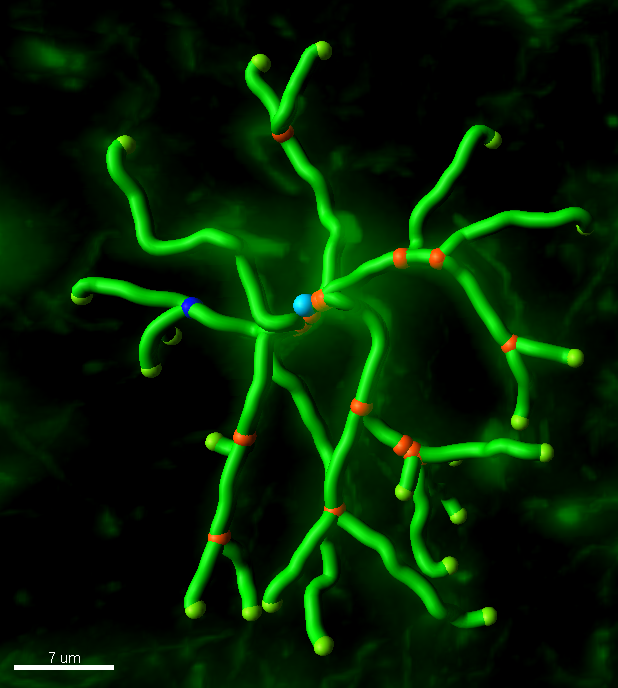
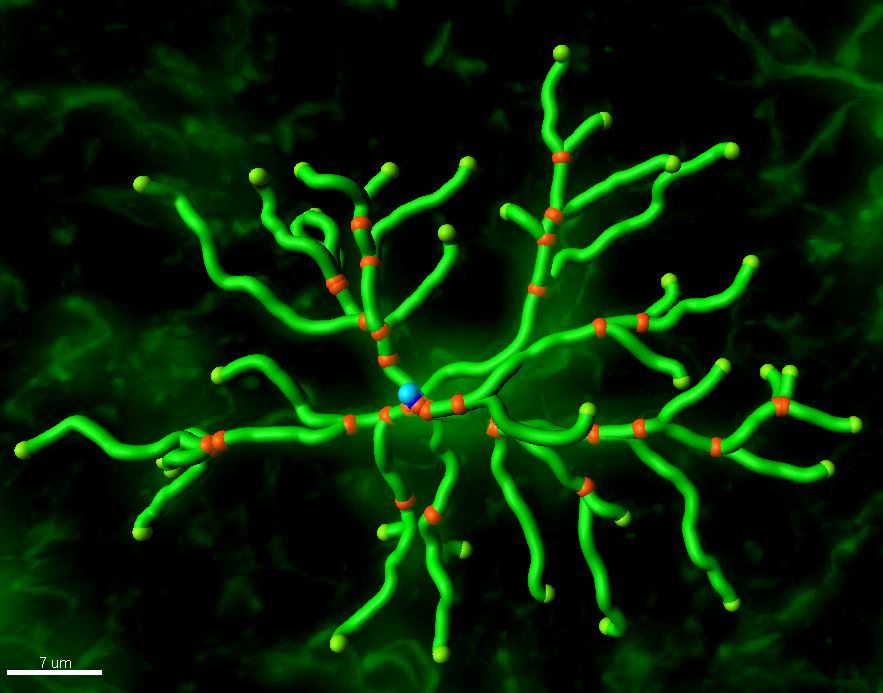
These images shows astrocytic cells in the rat brain. Points of branching are shown by red dots. (A) shows a typical astrocyte in the brain’s memory centre when no cGP was given. (B) shows significant increase in astrocyte branching in the brain’s memory centre, when treated with cGP early in life. This type of branching is essential for building and maintaining the connections between brain cells (neurons). From https://pubmed.ncbi.nlm.nih.gov/34565308/
Supplementation with cGP-PRo® provides a powerful and natural way to balance IGF-1, supporting the brain’s blood vessels to stay strong and healthy.

The adult brain retains the ability to regenerate itself by activating stem cells, giving rise to new neurons - a process known as neurogenesis.10 Unfortunately, the ability to generate new brain cells decreases with age.11
As well as supporting healthy blood vessels, IGF-1 also stimulates the growth of new neurons as a part of healthy brain ageing. In a research study, IGF-1 was given to older animals by infusion into the brain. It triggered new neuron growth in the hippocampus, the brain’s memory centre and restored memory to youthful levels.12 Despite IGF-1’s huge potential as a memory-boosting therapeutic, it is broken down rapidly in the body, making it ineffective when given orally.
Activating IGF-1 through supplementation with cGP, which is both stable and highly bio available, therefore provides an excellent opportunity to support healthy IGF-1 activity, supporting learning and memory.
Adults with higher endogenous levels of cGP have better memory and learning.2 Preclinical studies show the same thing: animals that received cGP, even before birth via their mothers, had stronger memory later in life.13,14
cGP also supports brain function by stimulating BDNF (Brain-Derived Neurotrophic Factor),15,16 a key protein that helps brain cells grow, survive, and communicate. cGP also stimulates receptors that facilitate learning, called AMPA and TrkB receptors.17,18
Our brain needs cGP to support blood flow, enhance learning and memory, and defend against the effects of ageing. But as we grow older, the body can’t always keep up. cGP-PRo® delivers a daily therapeutic dose of cGP to help restore IGF-1 balance, keeping your brain nourished, oxygenated, and resilient, all essential for staying sharp, focused, and clear as you age.

When a stroke happens, time is critical. But recovery depends on more than fast treatment, it depends on how well the brain can repair itself. Studies show that our body’s own internal cGP plays a vital role in recovery and resilience after brain injury - people with higher cGP levels at the time of their stroke have much better outcomes months later.19
Preclinical research shows that administering a synthetic analogue of cGP shortly after stroke can reduce brain damage and promote blood vessel regeneration via IGF-1 pathways.20 Additional studies in animal models of brain injury found that cGP increased neural stem cell numbers - a sign of new neuron formation and accelerated functional recovery. 21,22
Parkinson’s and Alzheimer’s are both linked to reduced IGF 1 activity and impaired blood flow in the brain. 1,23,24 These changes can accelerate neuron loss and worsen symptoms.
A large study found that older adults with low IGF-1 levels had a 51% higher risk of developing Alzheimer’s disease. 24 In animal studies of Alzheimer’s disease, treatment with cGP - the master regulator of IGF-1, improves memory and reduces amyloid plaque buildup in a mouse model of the disease. 25
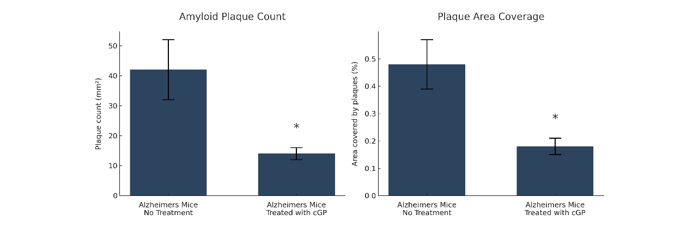
Image (A) shows the amyloid plaque density in Alzheimer’s mice brains when not treated, versus a significantly lower plaque density when treated with cGP. (B) shows the brain area covered by plaques in Alzheimer’s mice when untreated, and the significant reduction in area covered by plaques when treated with cGP. This image shows the results indicate cGP reduced Alzheimer’s brain pathology in a mouse model of the disease. From https://pubmed.ncbi.nlm.nih.gov/36909366/
cGP may also provide support for those living with Parkinson’s. Parkinson’s patients with higher cGP levels have better memory and learning 2 and taking cGP orally supports improved mood. A clinical study led by our Chief Scientist, Dr Jian Guan, in partnership with Professor Tim Anderson, used a blackcurrant extract rich in cGP. After four weeks of supplementation, participants had higher cGP levels in both blood and spinal fluid, and improved mood and reduced anxiety. 26 The therapeutic potential of cGP for Parkinson’s was also shown in an animal model of the disease. When mice with a Parkinsons brain injury were treated with a synthetic analogue of cGP, their motor symptoms were significantly improved.
This research paves the way for further clinical studies,and points to a preventative and protective role for cGP-PRo® as a natural solution for anyone wanting to protect themselves or their loved ones to safeguard their future brain health.
cGP-PRo® is the only natural product that provides a standardised, therapeutic dose of cGP. It is backed by science, clinically tested, and shown to be orally bio available. That means it can be absorbed into your bloodstream and reach your brain, where it is needed most. 26 Whether you want to support memory, protect long term brain health or recover after a neurological event, cGP-PRo® is a powerful tool to help you take control of your cognitive future.
1. Guan, J. et al. The role for IGF-1-derived small neuropeptides as atherapeutic target for neurological disorders. Expert Opinion on Therapeutic Targets vol. 19 785–793 Preprint athttps://doi.org/10.1517/14728222.2015.1010514 (2015).
2. Fan, D. et al.Changes of plasma cGP/IGF-1 molar ratio with age is associated with cognitivestatus of Parkinson disease. Alzheimer’sand Dementia: Diagnosis, Assessment and Disease Monitoring 12, (2020).
3. Guan, J. et al.Cyclic glycine-proline regulates IGF-1 homeostasis by altering the binding of IGFBP-3 to IGF-1. Sci Rep 4, (2014).
4. Toth, L. et al.Age-related decline in circulating IGF-1 associates with impaired neurovascular coupling responses in older adults. Geroscience 44, 2771–2783 (2022).
5. Wåhlin, A. & Nyberg, L. At the Heart of Cognitive Functioning in Aging. Trends Cogn Sci23, 717–720 (2019).
6. Wåhlin, A., Ambarki, K., Birgander, R., Malm, J. &Eklund, A. Intracranial pulsatility is associated with regional brain volume in elderly individuals. Neurobiol Aging 35, 365–372 (2014).
7. Graff, B. J., Payne, S. J. & El-Bouri, W. K. The AgeingBrain: Investigating the Role of Age in Changes to the Human Cerebral Microvasculature With an in silico Model. Front Aging Neurosci 13, (2021).
8. Juttukonda, M. R. etal. Characterizing cerebral hemodynamics across the adult lifespan witharterial spin labeling MRI data from the Human Connectome Project-Aging. Neuroimage 230, 117807 (2021).
9. Singh-Mallah, G. etal. Administration of cyclic glycine-proline during infancy improves adultspatial memory, astrocyte plasticity, vascularization and GluR-1 expression inrats. Nutr Neurosci 25, 2517–2527 (2022).
10. Dumitru, I. et al.Identification of proliferating neural progenitors in the adult humanhippocampus. Science (1979) 389, 58–63 (2025).
11. Kase, Y., Shimazaki, T. & Okano, H. Current understandingof adult neurogenesis in the mammalian brain: how does adult neurogenesisdecrease with age? Inflamm Regen 40, 10 (2020).
12. Morel, G. R., León, M. L., Uriarte, M., Reggiani, P. C. &Goya, R. G. Therapeutic potential of IGF-I on hippocampal neurogenesis andfunction during aging. Neurogenesis 4, e1259709 (2017).
13. Singh-Mallah, G. et al.Maternally administered cyclic glycine-proline increases insulin-like growthfactor-1 bioavailability and novelty recognition in developing offspring. Endocrinology 157, 3130–3139 (2016).
14. Gudasheva, T. A. et al.Identification of a novel endogenous memory facilitating cyclic dipeptide cyclo‐prolylglycine in rat brain. FEBS Lett 391, 149–152 (1996).
15. Gudasheva, T. A., Koliasnikova, K. N., Antipova, T. A. &Seredenin, S. B. Neuropeptide cycloprolylglycine increases the levels ofbrain-derived neurotrophic factor in neuronal cells. Dokl Biochem Biophys 469,273–276 (2016).
16. Abdullina, A. A. et al.The neuropeptide cycloprolylglycine produces antidepressant-like effect andenhances BDNF gene expression in themice cortex. Journal ofPsychopharmacology 36, 214–222(2022).
17. Gudasheva, T. A., Grigoriev, V. V., Koliasnikova, K. N.,Zamoyski, V. L. & Seredenin, S. B. Neuropeptide cycloprolylglycine is anendogenous positive modulator of AMPA receptors. Dokl Biochem Biophys 471,387–389 (2016).
18. Gudasheva, T. A. et al.Neuroprotective Effect of the Neuropeptide Cycloprolylglycine Depends on AMPA-and TrkB-Receptor Activation. DoklBiochem Biophys 507, 264–267(2022).
19. Fan, D., Krishnamurthi, R., Harris, P., Barber, P. A. &Guan, J. Plasma cyclic glycine proline/IGF-1 ratio predicts clinical outcomeand recovery in stroke patients. Ann ClinTransl Neurol 6, 669–677 (2019).
20. Guan, J. et al.Peripheral administration of a novel diketopiperazine, NNZ 2591, prevents braininjury and improves somatosensory-motor function following hypoxia-ischemia inadult rats. Neuropharmacology 53, 749–762 (2007).
21. Kaneko, H., Namihira, M., Yamamoto, S., Numata, N. &Hyodo, K. Oral administration of cyclic glycyl-proline facilitates tasklearning in a rat stroke model. Behavioura lBrain Research 417, (2022).
22. Krishnamurthi, R., Mathai, S., Kim, A., Zhang, R. & Guan,J. A novel diketopiperazine improves functional recovery given after the onsetof 6‐OHDA‐inducedmotor deficit in rats. Br J Pharmacol156, 662–672 (2009).
23. Castilla-Cortázar, I., Aguirre, G. A., Femat-Roldán, G.,Martín-Estal, I. & Espinosa, L. Is insulin-like growth factor-1 involved in Parkinson’s disease development? J TranslMed 18, 70 (2020).
24. Westwood, A. J. et al.Insulin-like Growth Factor-1 and Risk ofAlzheimer Dementia and Brain Atrophy. (2014).
25. Arora, T. & Sharma, S. K. Cyclic Glycine-Proline ImprovesMemory and Reduces Amyloid Plaque Load in APP/PS1 Transgenic Mouse Model ofAlzheimer’s Disease. Int J Alzheimers Dis2023, (2023).
26. Fan, D. et al.Supplementation of blackcurrant anthocyanins increased cyclic glycine-prolinein the cerebrospinal fluid of parkinson patients: Potential treatment toimprove insulin-like growth factor-1 function. Nutrients 10, (2018).